Venus flytraps are notoriously hard to care for. However, their reputation for being challenging to grow is somewhat unwarranted.
There are only a few, but quite strict, rules to follow for basic care of a Venus flytrap. Follow these basic Venus flytrap care techniques and you will have beautiful plants for many years!
And just so you know that we (Leah and Matt) know what we’re talking about in terms of growing healthy Venus flytraps, here are a few videos of Matt’s personal Venus flytrap collection from 2026 and 2025: Matt’s Venus flytrap collection in June 2026 Matt’s Venus flytrap collection in May 2026 Matt’s Venus flytrap and Sarracenia collection in July 2025
Čtyři základní potřeby Venus flytraps
Healthy and Happy Venus flytraps There are really only four things Venus flytrap plants require to stay healthy: Sunlight: At least four hours of direct sunlight a day (i.e. full sun) Water: rain, distilled, or reverse osmosis water only Soil: Nutrient poor soil such as peat moss or sphagnum moss and a pot with good drainage Dormancy: A yearly dormancy period in the winter months
Adolescentní Venus flytraps pod umělým osvětlením
Light for Venus flytraps Venus flytraps require a lot of light. They should receive at least 4 hours of direct sunlight a day with 6 to 8 hours being ideal.
It is best to grow your Venus flytrap plant outside where it can get plenty of sun and catch its own food.
It isn’t necessary to feed a Venus flytrap anything other than sunlight and water.
If you do choose to feed it, feed it only insects and at most only a few insects a month.
Feeding a Venus flytrap, or growing it somewhere that it can catch its own food, can help it grow much more quickly.
Voda a zalévání Venus flytraps
Water for Venus flytraps Venus flytraps need clean water.
Most tap water will not be suitable for watering them due to the high mineral content. It is best to use distilled water, rainwater, or reverse osmosis water. Venus flytraps need water with a TDS (total dissolved solids) measurement of 50 ppm (parts per million) or less.
In order to get this, you will probably need to use distilled water or reverse osmosis water or rainwater. If desired, you can use a TDS meter to test your tap water and see if it is usable.
Growers often use water with a TDS measurement between 50 ppm and 100 ppm. However, this requires regular flushing and repotting to prevent mineral buildup in the soil.
Their soil should be kept damp at all times. They prefer to have soil that is not soaking wet all the time. However, the soil must never be allowed to dry out.
Zemina a substrát pro Venus flytraps
Allow the soil to dry to the point where it is just damp then thoroughly water the plant until the soil is completely soaked. Then allow the soil to dry to the point of being barely damp again before repeating the process.
Many growers set the Venus flytrap’s pot in a tray of water for 30 to 45 minutes and allow the soil to soak up as much water as it can hold. Alternatively, they do enjoy being watered from the top.
Pouring water over the top of the pot and allowing it to soak into the soil will carry some nitrogen down into the soil and aerate the roots. Either way, when watering a Venus flytrap, ensure that the soil is thoroughly and evenly soaked all the way through. Then allow the soil to dry to the point where it is barely damp before watering again.
Půda a nádoba
Soil for Venus flytraps If your Venus flytrap needs to be repotted, for Venus flytrap soil you should use a combination of peat moss and perlite. Many growers use a 50:50 mix of peat moss and perlite or peat moss and horticultural grade silica sand. Pure peat moss works well also.
We’ve been growing Venus flytraps for over a decade now and have used many different soil types. As of the last few years, we’ve preferred growing in New Zealand long-fiber sphagnum moss. The flytraps grow more quickly and have few health issues when grown in New Zealand long-fiber sphagnum moss as long as they are repotted annually in the spring.
Venus flytraps aren’t terribly picky about the soil or soil mixture they grow in as long as it is some form of long-fiber sphagnum or sphagnum peat moss which ensures that the media is nutrient-poor. Using perlite helps keep their soil aerated which allows for healthy root growth that leads to larger, more robust plants. Avoid using vermiculite because it often contains minerals that will slowly poison Venus flytraps. Unglazed clay pots shouldn’t be used for pots because the minerals in the clay can seep into the soil and eventually cause harm to a Venus flytrap. For this reason, it’s best to use plastic pots. We prefer pots that are at least four inches deep because they provide enough room to accommodate the roots well. The deeper the better!
Dormancie a cyklus“odpočinku”
During dormancy: Dormancy for Venus flytraps When summer is over and fall has started, it is time to think about providing dormancy for your Venus flytrap. Without a dormancy period, your plant’s health will start to decline and it will eventually die. Venus flytraps go dormant naturally when given natural sunlight and seasonal changes.
For more extremely detailed information about how to best take care of your Venus flytraps, be sure to see our Comprehensive Detailed Venus flytrap Care Information article.
Venus flytraps Exiting Dormancy Questions? Join the FlytrapCare Forums There is an active and friendly community of growers here on the FlytrapCare Forums. Be sure to check out FlytrapStore.com for a huge selection of Venus flytraps for sale.
Historie a popis druhu
Venus Flytrap (Venus Flytrap) má ve zvyku kořist na hmyzu. Obecně se tento druh rostliny nazývá "masožravá rostlina" nebo "hmyzožravá rostlina". Jak bylo uvedeno výše, dravé orgány mucholapky Venuše jsou součástí jejích listů. Většina těchto masožravých rostlin roste v mokřadech s relativně špatnými živinami.
Aby doplnili nedostatek živin, zejména dusíku a kyseliny fosforečné, mají speciálně vyvinuté struktury, které živí hmyz, aby strávily své živiny. Původním místem mucholapky Venuše jsou pasti na mokřadech a půda v této oblasti je většinou rašelina a křemenný písek. Většina jeho zdroje vody je dešťová voda. Jak se dešťová voda spojuje s oxidem uhličitým a padá na zem atmosférou, vytváří kyselé prostředí s pH asi 5-6.
Je vidět, že Venus flytrap preferuje místa, kde je dostatek vody a kyselé prostředí je médium. Kyselá půda a nízká teplota brání růstu bakterií, které rozkládají organickou hmotu. Pokud však organická hmota není rozložena, pozůstatky rostlin, jako je mech sphagnum, nelze zcela rozkládat a rozkládat. Tato rozkládající se organická hmota se změní na rašelina a postrádá živiny. Kromě toho, že byly v průběhu let spláchnuty deštěm, byly stopové prvky téměř ztraceny.
Životní cyklus a rozmnožování
Venuše flytrap je trvalá bylina. Poté, co semena klíčí, dosáhnou zralosti po 4 až 5 letech a začnou kvést a přinášet ovoce. S dobrou péčí může mucholapka Venuše žít nejméně 20 až 30 let. Venuše flytraps začnou kvést krátce poté, co se na jaře vypěstují nové listy, a vyrostou až na 15V horní části květinového stonku 25 cm je asi 10 pupenů. Květina kvete každý druhý den, barva květu je bílá. Květina může kvést několik dní před opylením, ale pokud je opylení úspěšné, květina zemře další den, pak se vaječník postupně rozšíří a ovoce zraje asi za několik týdnů. Zralé ovoce obsahuje desítky černých semen ve tvaru kapky.
Poté, co květy kvetou, bude mucholapka Venuše i nadále růst více listů a pěstovat větší pasti na hmyz. Toto je období, kdy mucholapka Venuše potřebuje hodně predace k ukládání živin. Na kvetení příštího roku. Plody, které jsou nastaveny na konci jara, zrají v létě a praskající semena budou klíčit po určitou dobu. Mladá mucholapka Venuše nejprve pěstuje falešné listy a pak první cotyledon s kompletní pastí na hmyz začne chytat hmyz.
Další úvahy a praktické tipy
Listový život mucholapky Venuše je asi několik měsíců (2 až 3 měsíce) na podzim, ale jen několik týdnů v létě; staré listy postupně zežloutnou, ztratí schopnost zachytit hmyz a nakonec zčernanou a zemřou, ale nové listy stále rostou ze středu; po celé léto bude mucholapka Venuše nadále růst nové listy, až do podzimu pěstovat další pomaleji rostoucí listy; v této době jsou listy pěstované v létě tak velké, že chmýřely. , Venuše flytrap je připravena na zimu. V zimě některé malé pasti na hmyz zůstanou, ale ztratily schopnost zachytit hmyz a jsou sotva používány.
My Craziest Flytrap Videos of 2025!
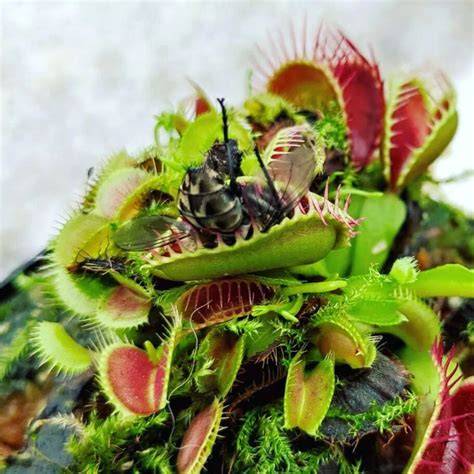
Když je klima příliš chladné, listy na zemi zchudnou. Predační struktura mucholapky Venuše je klip tvořený symetrickým levým a pravým listem. Tato struktura jako klip je specializovaná z listu a struktura jako list, která spojuje lapač hmyzu, je řádk. Vnější okraj pasti je lemován chloupky. Tyto chloupky jsou měkké a mohou být použity k zabránění úniku zachycené hmyzu. Když hmyz zachycuje hmyz, chloupky na koncích svorek se potácejí a stávají se klecí, což zabraňuje úniku hmyzu. Vnitřek pasti je červený a je pokryt mnoha malými červenými skvrnami, což jsou trávicí žlázy mucholapky Venuše. Na vnitřní straně pasti jsou vidět tři páry jemných chloupků. Tyto jemné chloupky jsou smyslové chloupky mucholapky Venuše, které se používají k detekci, zda hmyz dosáhl vhodné polohy pro chytání.

For many gardeners, the first plant they were given to grow and care for as a child was a Venus fly trap (Dionaea muscipula). This fun plant is carnivorous and 'catches' flies, much to the amusement of anyone lucky enough to see it in action. Native to North and South Carolina, Venus fly trap is named after the Roman goddess of love, Venus, due to its beautiful white flowers. The species name of muscipula (Latin for 'mousetrap') is thought to refer to the plant's resemblance to a mouse trap.
The catching parts, or 'traps' of a Venus fly trap are actually modified leaves, consisting of two, flat toothed leaves connected by a hinge. Inside the trap is nectar, which lures insects to their death - once the insect has made contact with one of the hairs within the trap it closes, trapping its prey inside. Once closed, enzymes within the trap digest the insect, which can take up to 10 days. When digestion is complete, the trap reopens.